
In my conversation with Neste CEO Heikki Malinen, we discussed a challenge that will shape the pace of the climate transition: how to make lower-emission solutions commercially viable. Industry has a crucial role to play, but companies cannot deliver this transformation alone. Markets must reward the investments and purchasing decisions that reduce emissions.
At Outokumpu, we have reduced our emissions intensity by 33% since 2016. Our stainless steel contains 95% recycled material, and our carbon footprint is on average 75% below the global industry average. These results demonstrate what industrial innovation can deliver.
However, scaling that progress requires a market in which lower emissions influence commercial decisions.
As the world gathers at COP31, we need to connect climate ambition with the purchasing and investment decisions that shape markets. Companies must turn climate commitments into action across their value chains and governments must establish predictable market conditions that enable long-term investment and a level playing field. Both have a role in making lower-emission materials a competitive choice.
The market signal remains too weak
The International Energy Agency’s 2025 Breakthrough Agenda Report highlights the gap between ambition and demand. Buyer-supplier initiatives signaled 3.3 million tons of demand for near-zero-emissions steel in 2024. Yet the IEA concludes that demand commitments remain insufficient to support deployment at the pace and scale needed.
Cost is a challenge to this early adoption, especially where technological innovations are needed. For example, the IEA estimates that the early commercial development of plants using 100% hydrogen-based direct reduced iron and electric arc furnace technology can cost 50–140% more than conventional blast furnace steelmaking, depending on the region. This estimate applies to a specific production pathway, but it illustrates why new technologies can struggle to scale without supportive market conditions.
The wider lesson is that innovation and market adoption must advance together. Producers need to keep improving their products and processes, and buyers need to create clear demand for those improvements – and of course, this is underpinned with policy that sets a clear investment case for both.
Competitiveness must be part of the climate equation
The steel industry faces these challenges in a difficult market environment. The OECD’s Steel Outlook 2025 projected that global excess steelmaking capacity could reach 721 million tons by 2027 if planned capacity expansion materializes. It warned that pressure on profitability could undermine investment in decarbonization.
This is not a reason to slow the transition. It is a reason to take the commercial conditions for the transition seriously.
Industrial competitiveness depends on energy costs, raw materials, technology, skills, infrastructure and the conditions under which companies compete internationally. When companies invest in lower-emission production but cannot recover the associated costs in the market, further investment becomes harder to sustain. First movers can also face pressure when competitors operate under substantially different conditions.
Climate policy and industrial policy therefore need to reinforce one another. The objective should be to accelerate emissions reductions while enabling companies to invest, innovate and compete over the long term.
For business leaders, this means integrating decarbonization into core decisions on capital allocation, product development, supplier selection and customer partnerships. Sustainability commitments become more consequential when they shape what a company buys and how it competes.
For policymakers, it means providing clear and durable signals, supporting credible emissions measurement and using public procurement to help establish demand for lower-emission materials. Public procurement can help create early markets, but private-sector demand will be essential to scaling adoption.
First movers are already creating momentum
The market signal remains too weak overall, but the first movers are not waiting for perfect conditions. Across industrial value chains, first mover companies are beginning to turn climate commitments into decisions about materials, suppliers and production. Their choices show that demand for lower-emission solutions can take shape today, even as the wider market develops.
At Outokumpu, we already today work with customers who want to lead the transition forward.
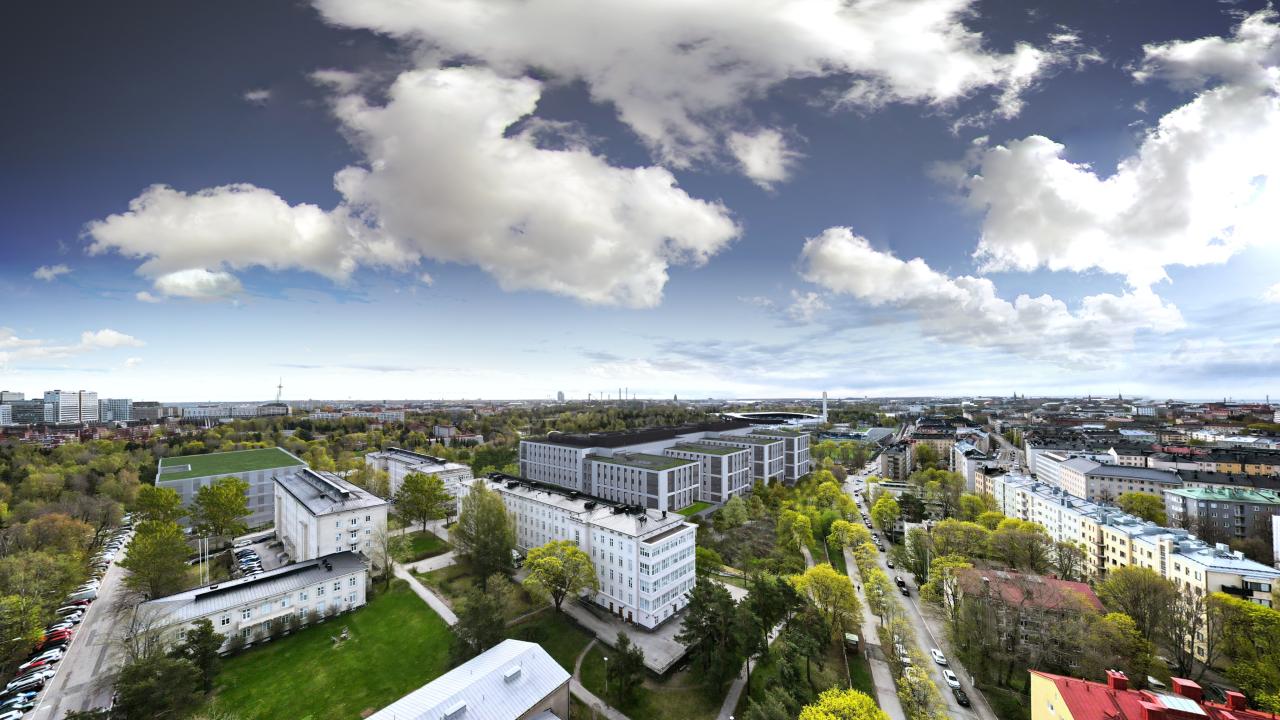
Laakso Joint Hospital in Helsinki, Finland
Our collaboration with Alfa Laval and SSAB for the Laakso Joint Hospital project in Helsinki shows how partners across the value chain can reduce emissions together. Five plate heat exchangers incorporating low-emission stainless steel from Outokumpu and low-emission steel from SSAB were designed to achieve a product carbon footprint up to 60% lower than conventional Alfa Laval heat exchangers. This collaboration perfectly shows how material choices can reduce upstream emissions while supporting energy-efficient building systems.
Another example is our partnership with Alstom to supply low-emission stainless steel for its next-generation metro cars. This work directly supports Alstom’s efforts to reduce emissions from procured goods and services 30% by 2030 and embodies how demand from major industrial customers can help bring lower-emission materials into transport infrastructure used by millions of people.
To accelerate progress, early action needs to become easier to scale. Buyers need confidence that lower-emission materials will be available and deliver the required performance. Producers need stronger demand signals to support investment and expand supply.
Turning climate ambition into market action
Scaling industrial decarbonization requires markets that recognize emissions performance and reward companies that invest in reducing it. Governments can help create lead markets through public procurement, embodied-carbon criteria for infrastructure projects. Clear definitions and standards for lower-emission materials will give producers greater confidence to invest and customers stronger incentives to act.
Carbon pricing and trade policy must reinforce these efforts. Effective implementation of the EU’s Carbon Border Adjustment Mechanism (CBAM), alongside the EU Emissions Trading System, must be kept in place to address carbon leakage and support a level playing field competition as the industry decarbonizes.
Businesses must turn climate commitments into purchasing decisions, making emissions performance a consideration alongside cost, quality and reliability. At Outokumpu, we are ready to work with customers and policymakers to scale lower-emission solutions.
COP31 must give the market confidence to the companies who are decarbonizing: predictable policy is the way to accelerate and reward industrial decarbonization. When policy and purchasing decisions pull in the same direction, reducing carbon emissions will strengthen competitiveness and help first movers lead the transition.