Perhaps never in history has mining been as strategically important as it is today, though mining is one of humanity’s oldest industries. Critical minerals power the world we live in: renewable energy systems, electric vehicles, digital infrastructure, medical technologies, and virtually every modern innovation depends on access to minerals. Without minerals, society simply stops.
At the same time, global demand for these materials is accelerating, driven by the energy transition, electrification, and rapid technological advancement. Rising geopolitical tensions and increasing competition for strategic resources only amplify the urgency. For Europe, secure and responsibly sourced critical minerals are no longer just an industrial concern. They are a question of resilience, competitiveness, and autonomy.
Kemi mine: A strategic asset for Europe’s future
Outokumpu’s Kemi mine plays a unique role in this landscape. As the only chromium mine in the European Union, it anchors a fully European, fully traceable, and low‑emission value chain from ore to stainless steel. This ensures that European industries, from construction to mobility and renewable energy, have reliable access to one of the key raw materials needed for the clean transition.
Kemi is one of the world’s most modern underground mines, operating safely and sustainably for decades. With our deepening project extending operations from 500 meters to 1,000 meters underground, we have secured access to high‑quality chromium reserves at least into the 2060s. In a world of tightening supply and shifting geopolitics, long-term stability like this is a strategic advantage for Europe.
But securing the future requires more than mining the right minerals. It requires mining them in the right way.
Turning waste into value: Building a circular ecosystem in Kemi
Today, one of the biggest transformative opportunities in mining lies in side‑stream utilization. Every mining operation generates side streams, such as waste rock and tailings, which traditionally have limited use. Yet these materials can contain valuable minerals or physical properties suitable for innovative applications.
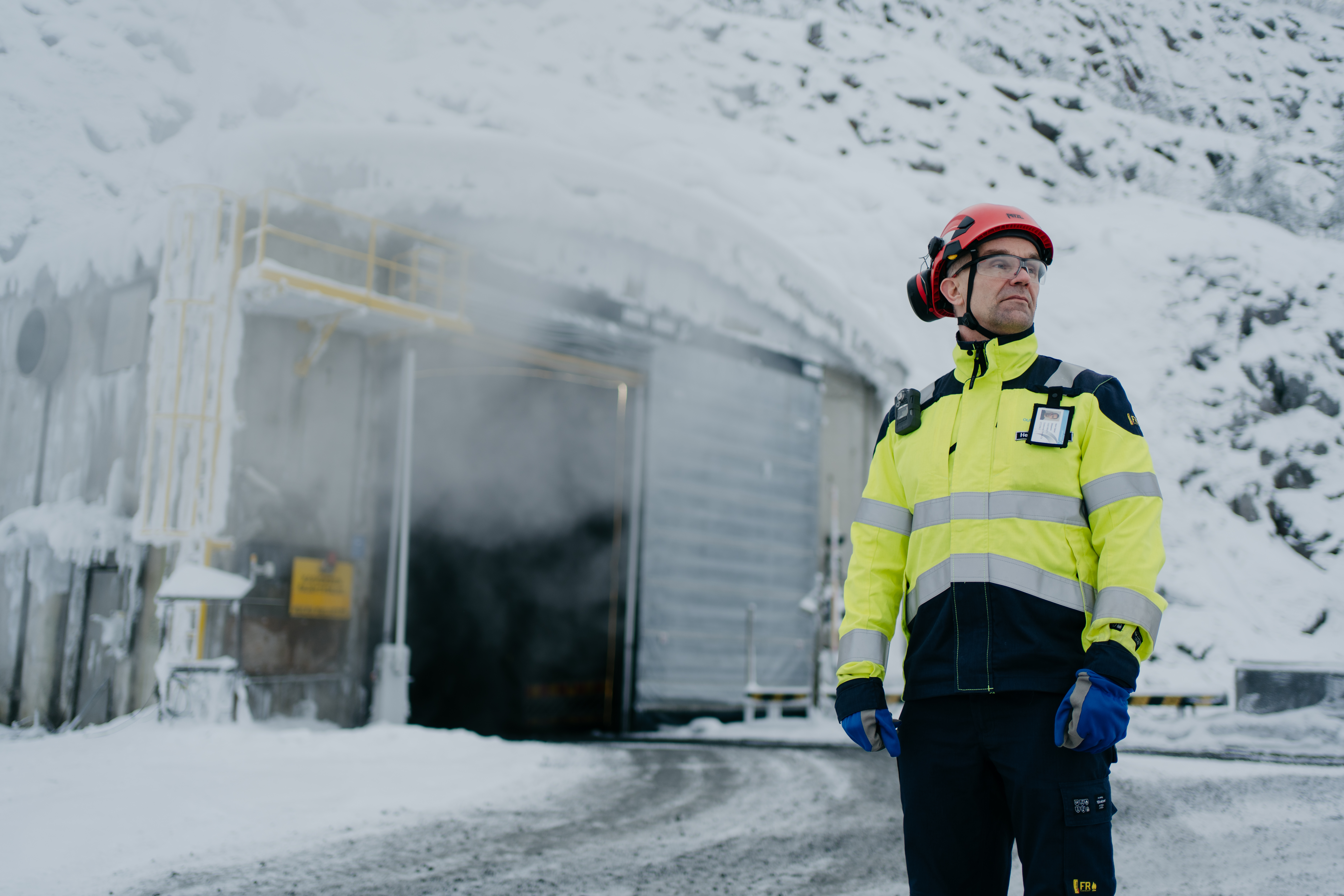
“At Outokumpu Kemi mine, we produce nearly 3 million tonnes of waste rock and tailings each year. Much of it is already used within the mining area. But the true potential is far greater.”
That is why we, together with the EU‑funded Lapland Mining Hub, business and development company Digipolis in Kemi, and leading research partners GTK and VTT, are building a data‑driven circular economy ecosystem at the Kemi mine.
The joint vision is ambitious:
To create the first industrial‑scale European model for turning mining side streams into valuable resources.
This is a shift from treating side streams as waste to treating them as strategic assets.
With transparent data, material characterization, and strong collaboration, the side streams from Kemi mine could support a wide range of future applications, including for example:
- Soil improvement materials
- Low‑carbon cement replacements for construction
- Carbon sequestration technologies
- Thermal energy storage in sand batteries
- Mineral recovery for industrial use
These solutions have the potential to dramatically reduce the need for virgin materials, while enabling new circular business models in the region and beyond.
The Kemi mine circular economy project will deliver transparent, high-quality data on the quantity, quality, and suitability of side streams for partners. In practice, this means small and medium-sized companies, technology developers, research institutions, and industrial operators will have an unprecedented foundation for innovation.
A scalable model for the EU starting in Lapland
Kemi is the ideal pilot site: a modern, long‑lived mine with stable operations and a strong local industrial ecosystem. But the long-term goal extends far beyond one location.
The model developed in Kemi will be validated locally and then scaled to other mines in Lapland and ultimately, to mining regions across Europe. The aim is not only to build a circular solution for Kemi, but to create a repeatable European blueprint for sustainable mineral ecosystems.
This is essential for the EU’s strategic autonomy. Europe cannot meet its climate targets, energy ambitions, or technological needs without secure access to critical minerals, and Europe cannot rely solely on imports. Building circularity into the mineral value chain strengthens both resilience and sustainability.
Strengthening collaboration: from Lapland to the Nordics and Europe
The Kemi mine circular economy ecosystem is actively seeking partners, both domestic and international. While local value creation and jobs are central, the initiative also provides an opportunity for global collaboration. In the first phase, we particularly welcome Nordic partners who can leverage the proximity of the Kemi site. Mining, SMEs, research organizations, and public actors all play a role. When these groups work together, side‑stream utilization becomes not just possible, but scalable and internationally competitive.
“Outokumpu is already a global leader in circularity: more than 95% of the raw materials we use are recycled. The circular ecosystem at our Kemi mine is a natural next step. It reflects our long-term commitment to responsible mining. For us, value is not only found in the ore we extract. It is in the resources we protect, the innovations we enable, and the ecosystems we build for the future. In a world defined by scarcity, this is how mining becomes a crucial part of the solution.”