
As the global leader in sustainable stainless steel, we have one of Europe’s most advanced industrial ecosystems in Northern Finland. In early 2026, we are taking the next leap forward: partnering with Norsk eFuel to transform carbon side streams into sustainable aviation fuel (eSAF), a project that could reduce our direct CO₂ emissions by 200,000 tons annually, equal to 20% of Outokumpu’s global direct emissions.
This collaboration is a blueprint for how heavy industry can lead the clean energy transition.
Kemi–Tornio: Europe’s circular economy powerhouse
Our operations in Kemi–Tornio represent the world’s largest integrated stainless steel production site and Europe’s biggest recycling hub, processing around two million tonnes of scrap stainless steel every year. This scale enables us to combine resource efficiency with circularity at an unmatched level. The Tornio site produces 1.5 million tonnes of stainless steel and 0.5 million tonnes of ferrochrome annually, while the nearby Kemi mine processes 2.5 million tonnes of ore per year. As the only chrome mine in the EU, Kemi is a strategic asset for European raw material autonomy.
This integrated value chain is not only large – it is low-carbon. Outokumpu’s stainless steel has a 75% lower carbon footprint than the global industry average*, and our ferrochrome footprint is 67% lower than the sector benchmark.** These achievements reflect decades of investment in energy efficiency, recycling, and process innovation.
The ecosystem’s impact extends beyond production. With over 2,000 employees at Kemi–Tornio and hundreds of contractors at the mine and at Tornio site, Outokumpu is a major employer in the region, supporting an estimated 8,000 indirect jobs.
Our infrastructure underscores the scale and complexity of this industrial platform. The Tornio plant area spans 600 hectares, with 56 hectares of buildings, 50 kilometers of internal roads, and 10 kilometers of pedestrian and cycling routes. Tornio Harbor handles around 3 million tonnes of goods annually, making it the third largest in the Gulf of Bothnia, and is complemented by LNG supply and rail connections to Sweden. Energy consumption at the site totals 4 TWh annually, comparable to the entire city of Helsinki’s electricity use – a clear indicator of the responsibility and opportunity we hold in driving decarbonization.
Strategic investments ensure this ecosystem’s longevity. We have recently invested EUR 280 million to deepen the Kemi mine from 500 to 1,000 meters, and in January 2025, updated mineral reserve estimates showed a 95% increase, securing chrome supply for decades to come.
As Martti Sassi, President of Business Area Ferrochrome, explains:
Smart decarbonization is at the core of Outokumpu’s strategy. Our Kemi–Tornio ecosystem provides an excellent platform to strengthen the circular economy while delivering financial value. The partnership with Norsk eFuel shows how our commitment extends beyond low-emission stainless steel to innovative utilization of side streams.
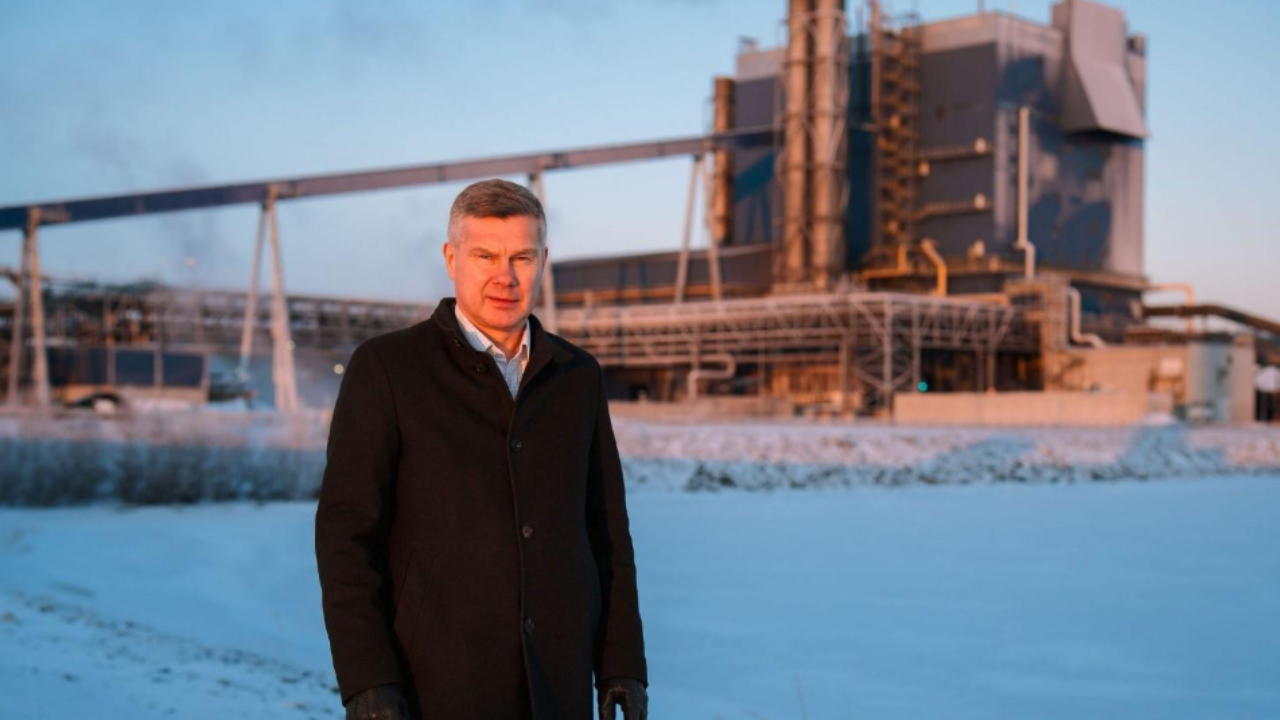
Martti Sassi, President of Business Area Ferrochrome, at Outokumpu’s ferrochrome plant in Tornio, Finland.
From side streams to eSAF: a blueprint for industrial symbiosis
Under the signed Memorandum of Understanding, Norsk eFuel will begin a feasibility study in 2026 for a COtoSAF plant adjacent to our Tornio mill. If successful, the plant could start producing 80,000–100,000 tonnes of eSAF annually by 2032, supporting the EU’s eSAF quotas and accelerating decarbonization in aviation—one of the hardest-to-abate sectors.
For Outokumpu, the benefits are twofold: a 200,000-ton annual reduction in direct CO₂ emissions and the creation of financial value through advanced side stream utilization. Norsk eFuel estimates an investment of EUR 1.2–1.5 billion on the project, creating around 250 new jobs locally and strengthening Europe’s strategic independence by securing domestic fuel supply.
Tommi Silvennoinen, Senior Manager, Strategic Partnerships in CCUS and New Energy Solutions, explains:
Our Tornio site is already a recycling powerhouse. The eSAF project will be the first industrial development in the Koivuluoto area and a catalyst for a vibrant circular ecosystem. Over time, we aim to attract new partnerships to the area and host multiple projects that utilize other side streams of our stainless steel production.
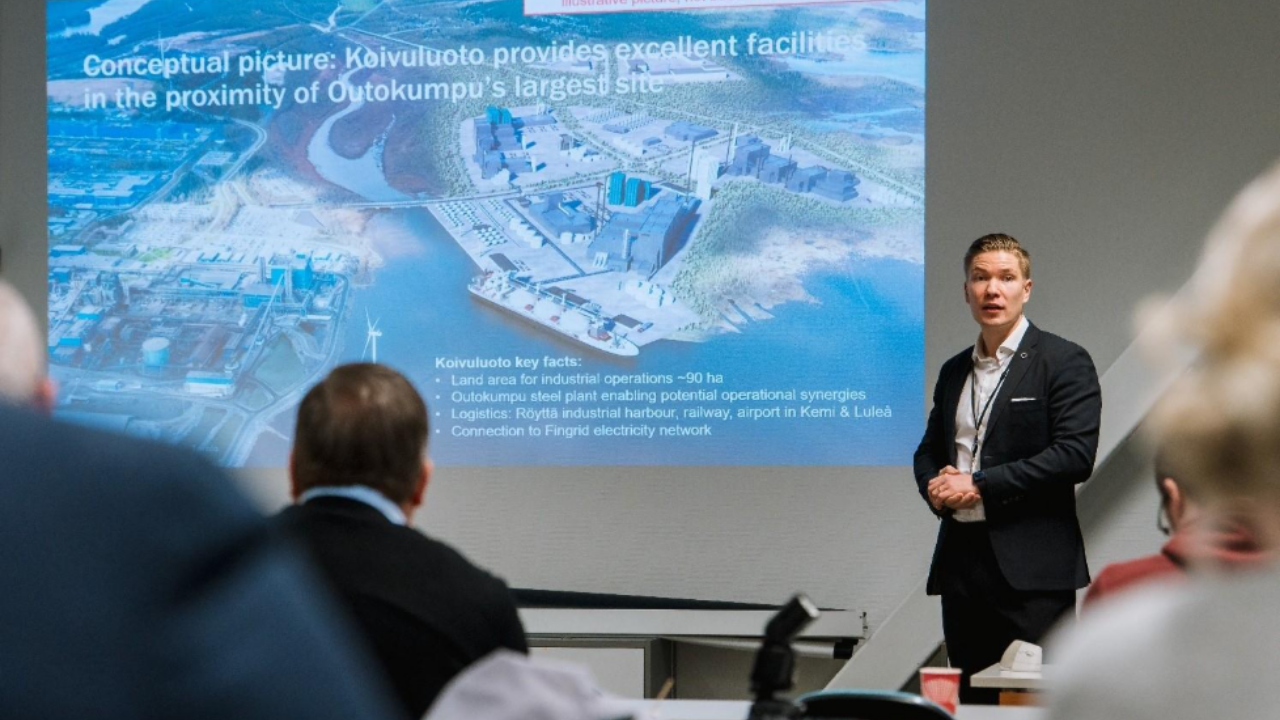 Tommi Silvennoinen, Senior Manager, Strategic Partnerships in CCUS and New Energy Solutions at Outokumpu.
Why Finland – and why Tornio?
Finland offers one of the most favorable environments for eSAF production thanks to abundant clean electricity, strong hydrogen economy support, and access to critical resources. Within Finland, the Bothnia Bay region – and particularly Tornio – stands out.
Outokumpu’s carbon monoxide streams from Tornio site are available year-round in high volumes and concentrations, collected at a single point. This enables cost-efficient eSAF production compared to projects relying on captured CO₂. Combined with our industrial scale, logistics, and energy infrastructure, Koivuluoto in Tornio is an optimal location for competitive, large-scale eSAF production.
Industrial smart decarbonization as a competitive strategy
Our approach is clear: build circular ecosystems that turn industrial side streams into strategic assets. The collaboration with Norsk eFuel exemplifies how heavy industry can be an engine for the clean energy transition – reducing emissions, unlocking new value, and strengthening regional resilience.
From stainless steel to sustainable aviation, from side streams to strategic fuels – the blueprint is here in Kemi–Tornio. Let’s scale the circular ecosystem approach across Europe.
*) Outokumpu’s average product carbon footprint (2024): 1.6 kg CO₂e per kg of stainless steel based on lifecycle assessment. Global average carbon footprint of stainless steel (2024): 7 kg CO₂e per kg of stainless steel. (Outokumpu’s calculation based on data provided by CRU, worldstainless, and Kobolde & Partners AB)
**) Global industry average based on International Chromium Development Association (ICDA) study in 2021: 10 t CO2 eq / t Cr compared to Outokumpu 3.34 CO2 eq / t Cr in 2023.