For companies like Outokumpu – and for any industry depending on critical minerals – transparency goes way beyond just a reporting exercise.
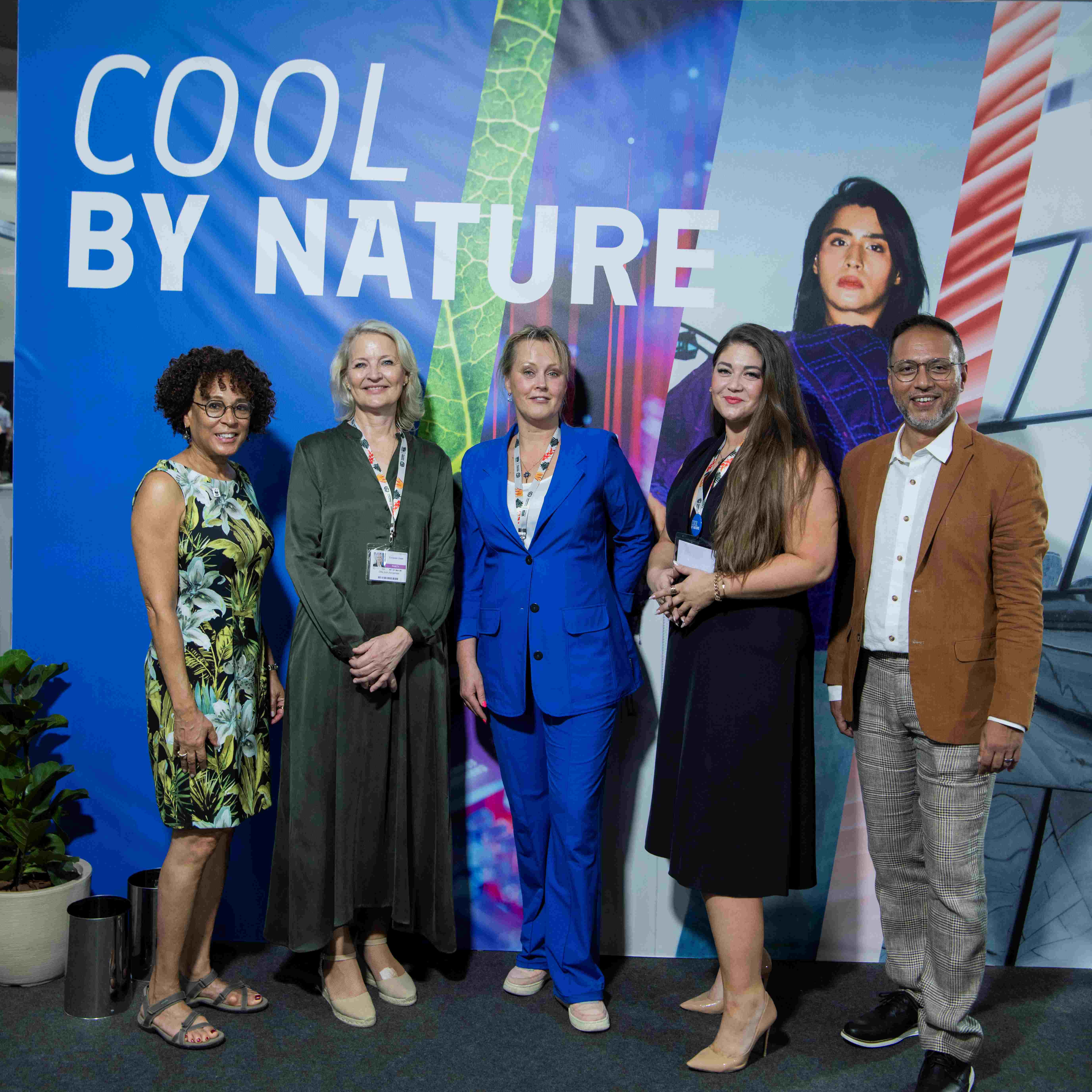
At COP30, our panel on accelerating transparency in critical raw material supply chains brought together leaders from the European Commission, WWF, Vale Base Metals, and Nokia.
The expectations for sustainable sourcing, data sharing, and climate-aligned business models are shifting at a rapid pace. It is becoming a fundamental driver of competitiveness, investment, and resilience.
Highlights from the panel discussion can be watched at the top of this page, or read on to get the key insights from the session.
Transparency is not optional – and momentum is building
Ditte Juul Jørgensen of the European Commission opened with a message that should resonate across industries: the direction is fixed. Europe is “staying the course” on net-zero 2050, tripling renewables, doubling energy efficiency, and deploying Carbon Boarder Adjustment Mechanism (CBAM) and the Critical Raw Materials Act. These are not temporary political projects – they are structural market shifts.
For those of us operating in global supply chains, the implications are profound. The metals that power electrification, mobility, digital infrastructure, and defense will increasingly need verifiable emission data, traceability to source, and evidence that human rights and environmental expectations are being met.
Momentum is building globally. Countries from Canada to Brazil are exploring carbon pricing. Major mining regions are developing responsible mining frameworks. Investors are pushing for clearer disclosures, with nature-related standards like TNFD gaining traction. The requirements are uneven but unmistakably expanding.
Transparency will soon be the minimum standard for market access. Companies that invest early will be better positioned as regulation tightens and global markets align on common expectations.
Real transparency requires cooperation across industries, regions, and all parts of the value chain
A second theme was that no single company or sector can build transparent raw material systems alone. Steel companies cannot solve traceability of nickel or iron without support from buyers. Technology companies cannot scale recycled materials without shared demand. Manufacturers cannot meet climate targets without reliable data from their suppliers.
The EU is advancing a strong policy framework, but global cooperation will determine whether transparency becomes seamless or fragmented. The Commission referenced partnerships under the UN Secretary General’s panel on critical minerals, G7 and G20 dialogues, and bilateral agreements with resource-rich regions. All aim to create interoperable systems so that transparency does not become a patchwork of competing requirements.
The role of communities is equally important. Marcene Mitchell from WWF reminded us that mining has historically created tension between economic development and environmental protection. If transparency is to be meaningful, it must include engagement with indigenous peoples, local residents, and workers – not only corporate actors.
Kirsten Hund from Vale emphasized this clearly: responsible mining requires constant dialogue with communities and authorities, embedding human rights and nature protection into the core business model. Technology will help – from digital product passports to remote sensing – but cooperation is ultimately about relationships, trust, and aligned incentives.
Outokumpu works closely with suppliers – in many occasions as the first one in the industry - to accelerate sustainability across the supply chain. However, we need others to join us on this path. Buyers must align with expectations, and policymakers must create the frameworks that reward shared transparency rather than isolated efforts.
Circularity and innovation will ease raw material pressure – but responsible mining remains essential
Circularity and recycling will play a major role in reducing the demand for virgin materials. At Outokumpu, our stainless steel is made with over 95% recycled content, and our mills function as major recycling hubs, processing more than 2 million tonnes of metal annually. This is one of the reasons our carbon footprint is up to 75% lower compared to the industry average.
But circularity alone cannot support the scale of the global energy transition. Technologies like wind power, electric vehicles, hydrogen systems, semiconductors, and defense applications still require primary materials with high purity and performance. WWF’s analysis showed that while mining has impacts, they can be significantly reduced with careful planning, responsible operations, and community-centered practices.
Innovation also has a role to play in this process. Outokumpu’s recent investments in innovative technology to enable low-emission chromium metal and ferrochrome production in the US show how new technologies can reduce the footprint of virgin materials. Likewise, advances in spatial mapping, carbon accounting, and digital traceability can help ensure that primary mining is conducted responsibly.
The reality is simple: the fastest route to an economy that supports our climate ambitions is a combination of ambitious circularity, transparent supply chains, and responsible mining – supported by innovation at every step.
Looking ahead
If there was one shared message across the panel, it was this: climate action is no longer theoretical. CBAM, ETS, corporate disclosures, global mining standards are here to stay, and early movers will benefit as markets adapt.
Transparency, cooperation, circularity, and innovation are not just sustainability strategies. They are competitiveness strategies. And they will define which industries lead in the next decade.
For companies and policymakers, the charge now is to turn uncertainty into stability, ambition into a shared vision, and innovation into real market impact. For Europe, that means staying the course: holding firm on carbon pricing, strengthening CBAM, and advancing policies that reward responsible production. Those who step up will shape supply chains and competitive by design, defining the next chapter of the global climate transition.
Check out more insights and learn about Outokumpu’s presence at COP30 here